Water Quality · September 10, 2026 · 5 min read
Hard Water in Jacksonville: What the Floridan Aquifer Means for Your Plumbing
Jacksonville's tap water is hard because it rises through the limestone of the Floridan aquifer. Here is what those minerals do to your water heater, faucets, and appliances — and what actually helps.
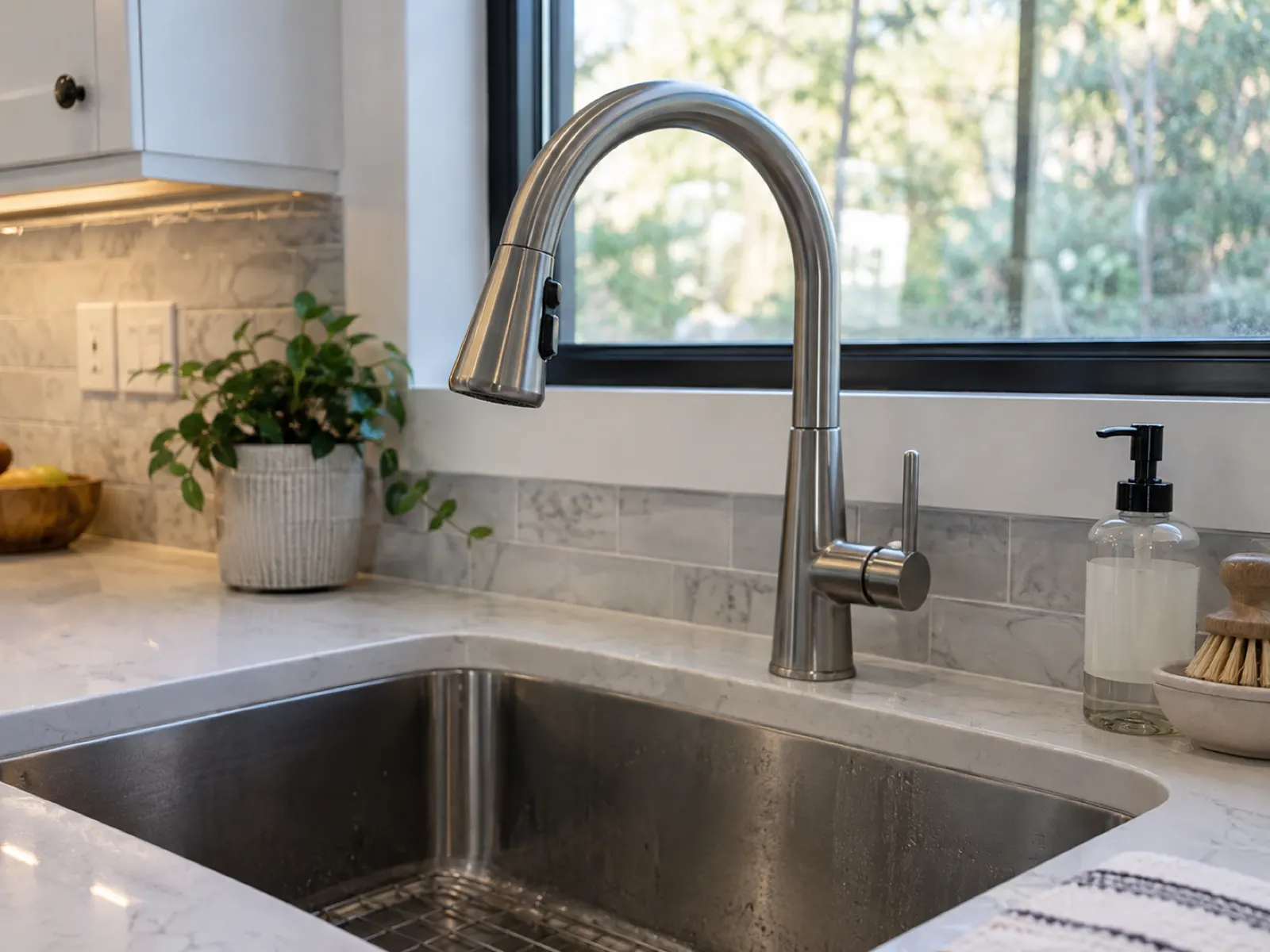
Jacksonville has hard water because nearly all of our drinking water is pumped from the Floridan aquifer, a vast limestone formation beneath North Florida — and water that spends centuries moving through limestone picks up a heavy load of dissolved calcium and magnesium along the way. Those minerals are harmless to drink. Your plumbing is another story: they come out of the water as scale wherever it is heated or left to evaporate, and over the years that scale quietly costs Jacksonville homeowners real money.
What is hard water, exactly?
Hard water is simply water carrying a high concentration of dissolved minerals, mainly calcium and magnesium. The minerals stay invisible while the water is cold and moving. Heat the water, or let a droplet dry on a fixture, and they come out of solution as a pale crusty deposit — the scale you see as white spots on a faucet and the sediment you hear rumbling in an old water heater. Test kits and utility reports measure hardness in grains per gallon or milligrams per liter, and the higher that number runs, the faster the deposits build.
Why is Jacksonville's water so mineral-heavy?
It comes down to geology. The Floridan aquifer is made of limestone and dolomite — rock that is largely calcium carbonate — and rainwater filtering down through it slowly dissolves the very minerals that later end up in your pipes. Whether your bill comes from JEA in Duval, the Clay County Utility Authority, or the St. Johns County utility, the source is broadly the same aquifer, so hardness is a fact of life across the First Coast rather than a problem with any one provider. The utilities treat the water to meet drinking water standards; hardness is not a safety issue, which is exactly why it is largely left in.
What does hard water do to your plumbing over time?
Scale does its damage slowly and mostly out of sight. Here is where it shows up in a typical Jacksonville home:
- Water heaters take the worst of it. Minerals drop out fastest in hot water, so sediment piles up at the bottom of a tank — making it run longer, pop and rumble, and wear out years early. In tankless units, scale narrows the fine passages of the heat exchanger.
- Faucet aerators clog. Those little screens at the tip of each faucet trap mineral grit, which is why pressure at one fixture often fades while the rest of the house is fine.
- Showerheads spray sideways or dribble as their nozzles crust over.
- Dishwashers and washing machines suffer scaled heating elements and clouded glassware, and detergents lather less effectively in hard water.
- Fixtures and shower glass collect white spots and film that return no matter how often you clean.
- Toilet fill valves and shut-off valves can stick or seep as deposits build on their moving parts.
None of this happens overnight, which is exactly why it gets missed. In newer areas like Nocatee and Oakleaf, builder-grade water heaters and fixtures from the 2000s construction wave are now reaching replacement age with a decade or more of scale inside them. In older neighborhoods like Riverside or Murray Hill, hard water works alongside aging pipes and original valves, so mineral buildup is one more load on a system that is already carrying years. Either way, the pattern is the same: the water is doing slow, steady work, and a little routine attention interrupts it.
What actually helps with hard water?
You do not need to solve hard water all at once — a few modest habits absorb most of the damage. Flushing the water heater once a year drains out the sediment layer before it hardens into a permanent blanket, and it is the single highest-value maintenance task in a hard-water city. Unscrewing and soaking faucet aerators in white vinegar every few months keeps flow strong and costs almost nothing. Wiping down fixtures and shower glass after use denies scale the standing droplets it grows from. And if you own a tankless heater, an annual descaling flush is not optional here — it is what protects the heat exchanger that the whole unit depends on.
The habit that pays for itself: flush the water heater once a year and soak the faucet aerators in vinegar a couple of times a year. Those two small chores address the two most common hard-water complaints we see in Jacksonville homes — early heater wear and fading faucet pressure.
Do you need a water softener in Jacksonville?
A softener is genuinely useful here, but it is an option, not a necessity — plenty of Jacksonville homes get by fine on the maintenance habits above. A whole-house softener removes the calcium and magnesium before they reach your plumbing, which means appliances last longer, soap lathers better, and the spots on the shower glass mostly stop. In exchange, you take on a piece of equipment that needs space, a drain connection, and a steady supply of salt, plus its own occasional service.
The honest way to decide: a softener makes the most sense if you are already replacing appliances early, fighting scale on every fixture, or installing a new water heater you want to protect — and it makes the least sense as a reflex purchase for a problem you have not actually measured. Hardness test strips from any hardware store will tell you what you are working with, or we can test during a visit. If you would like straight answers about your options — softener, maintenance plan, or both — call or message us and we will walk you through it with no pressure either way.